Affidavit of Good Moral Character: What USCIS Actually Requires for Naturalization
Does USCIS require an affidavit of good moral character for naturalization? Learn what good moral character means, what disqualifies you, and how to prove it.
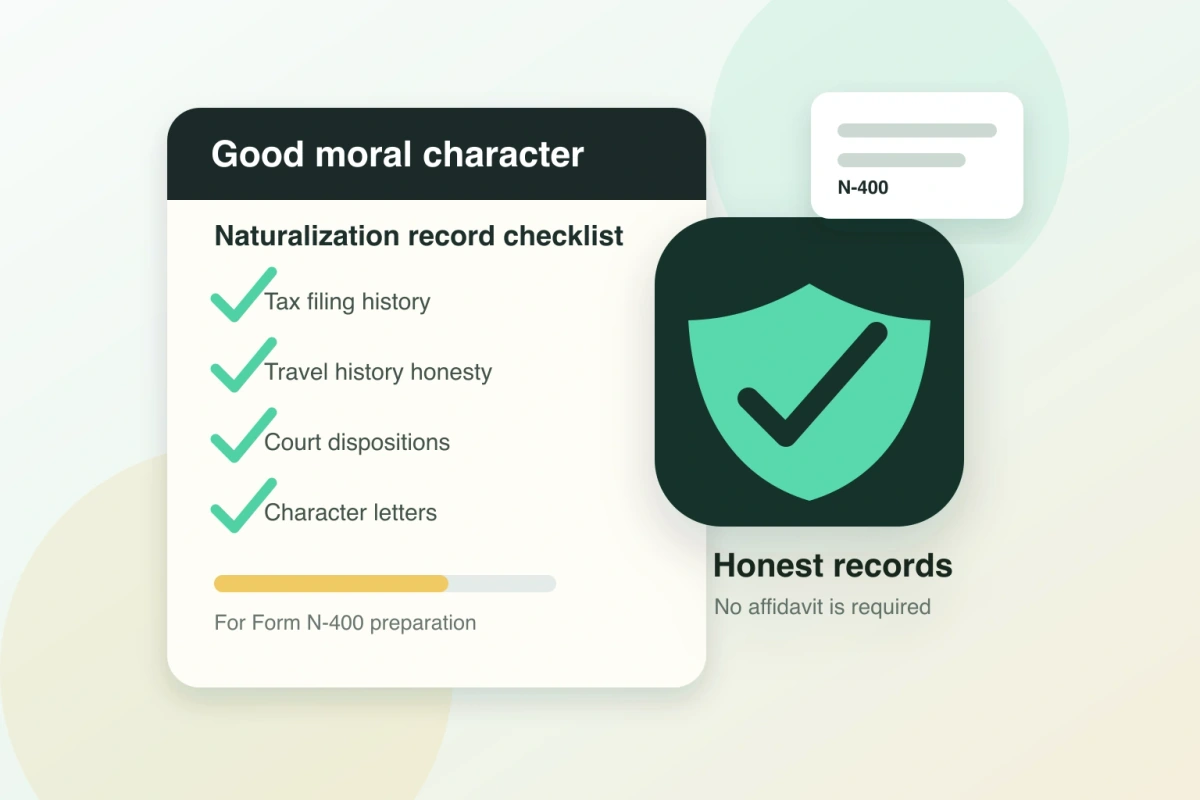
If you are preparing to apply for U.S. citizenship, you have probably searched for an affidavit of good moral character and wondered where to get one. Here is the surprising answer: for naturalization, there is no such form. Good moral character is a real and required part of the process, but USCIS evaluates it differently than many people expect. This guide explains what good moral character actually means for your Form N-400, what can disqualify you, and how to demonstrate it with confidence.
Quick Answer: USCIS does not require a formal affidavit of good moral character for naturalization. Instead, it evaluates your character during the statutory period (5 years, or 3 years if married to a U.S. citizen) using your Form N-400, background checks, your interview, and any supporting documents. You must show you have not committed disqualifying acts and that you have been honest. Character reference letters are optional, not mandatory.
Do You Need an Affidavit of Good Moral Character for Naturalization?
No. There is no official “affidavit of good moral character” that you file with Form N-400, the Application for Naturalization. The phrase appears in other legal contexts, such as certain state court matters or specific immigration waivers, which is why so many people search for it. For citizenship, though, USCIS reaches its own conclusion about your character from the evidence already in front of it.
What USCIS actually relies on is your application, the FBI and other background checks, your fingerprints, your interview, and the documents you bring. You can choose to submit character reference letters to support your case, but they are voluntary and they do not take the place of a clean record and an honest application. In most straightforward cases, applicants submit no character letters at all.
The most important things you can do are simple: tell the truth on every question, disclose every arrest or citation even if the case was dismissed, and bring the documents that back up your answers. For the requirements that travel can affect, our citizenship eligibility calculator can help you estimate your earliest filing date.
What Is Good Moral Character for U.S. Citizenship?
Good moral character (GMC) is the legal standard that you must measure up to the moral expectations of average citizens in your community. It is one of the core eligibility requirements for naturalization, alongside continuous residence, physical presence, and the English and civics tests.
USCIS assesses your good moral character during a specific window called the statutory period:
- 5 years for most lawful permanent residents.
- 3 years if you are married to and living with a U.S. citizen.
- 1 year for certain applicants who qualify through military service.
You must maintain good moral character from the start of that period all the way up to the moment you take the Oath of Allegiance. Importantly, USCIS can also look at conduct from before the statutory period if it is relevant to who you are today. The official rules live in the USCIS Policy Manual, Volume 12, Part F{:target=“_blank”}.
What Can Disqualify You: Permanent and Conditional Bars
The law divides character problems into two groups: permanent bars that block naturalization no matter how much time passes, and conditional bars that apply only when the conduct happened during the statutory period.
Permanent Bars to Good Moral Character
These apply at any time, past or present:
- Murder.
- An aggravated felony conviction on or after November 29, 1990.
- Genocide, torture, severe violations of religious freedom, or persecution of others.
If any of these are part of your history, naturalization is generally not possible, and you should speak with an immigration attorney before doing anything else.
Conditional Bars (During the Statutory Period)
These count against good moral character when they occur within your 5-year or 3-year window:
- A crime involving moral turpitude, or two or more offenses with a combined sentence of five years or more.
- A controlled substance violation, other than a single offense of simple possession of 30 grams or less of marijuana.
- Giving false testimony under oath to obtain an immigration benefit.
- Confinement to jail for 180 days or more during the period.
- Two or more gambling offenses, or earning your main income from illegal gambling.
- Failing to support dependents or committing acts that destroy a marriage, such as certain cases of adultery.
- Being involved in prostitution, alien smuggling, or polygamy.
USCIS also has a catch-all category for unlawful acts that reflect adversely on moral character, which can include things like failing to file taxes, failing to register for the Selective Service when required, or repeated traffic offenses that show a pattern.
How USCIS Evaluates Good Moral Character
USCIS does not just check a box. An officer weighs the totality of your circumstances, meaning the full picture of your conduct, not a single moment. Even when no permanent or conditional bar applies, an officer can still make a discretionary finding that your character falls short, or can find that positive factors outweigh a minor issue.
The evaluation happens across several touchpoints. Your Form N-400 asks detailed questions about arrests, citations, taxes, child support, membership in certain organizations, and honesty in past immigration filings. Your background and fingerprint checks surface anything on record. Then, at your naturalization interview, the officer goes through your answers in person and can ask follow-up questions. Honesty at every stage is essential, because USCIS already has access to the records that would reveal an omission.
How to Demonstrate Good Moral Character
For most applicants, demonstrating good moral character is less about adding documents and more about getting the basics right:
- Disclose everything. List every arrest, charge, and citation on Form N-400, even if the case was dismissed, expunged, or did not lead to a conviction. Bring certified court dispositions for each one.
- Stay current on taxes. File any required federal and state returns. If you owe back taxes, set up an IRS payment plan and bring proof of it.
- Meet your obligations. Keep up with court-ordered child support and any other legal duties.
- Register for the Selective Service if you are a man who lived in the United States between ages 18 and 26, or request a status information letter if you did not.
If your record has a minor issue you want to explain, or you are in a discretionary situation, you can add character reference letters. They are optional, but a strong one can help an officer see the full picture of who you are.
What to Include in a Good Moral Character Reference Letter
Because there is no official affidavit form, a character reference letter is the closest thing many applicants use, and the quality matters far more than the quantity. If you decide to include one or two, make them count.
Who should write it. Choose people who genuinely know you and can speak to your character with specifics: an employer or supervisor, a religious or community leader, a teacher, or a long-time friend. Letters from a mix of relationships are more persuasive than several from family members alone.
What it should contain. A useful letter is concrete, not flattering. It should include:
- How the writer knows you, in what capacity, and for how long.
- Specific examples of your honesty, reliability, and responsibility, such as volunteer work, steady employment, or caring for family.
- The writer’s full name, contact information, and immigration or citizenship status if relevant.
- A signature and the date.
Practical notes. USCIS does not require these letters to be notarized, although some applicants notarize them for formality. Keep each letter to one page, and make sure nothing in it contradicts your Form N-400 or your records. Avoid vague praise, exaggeration, and anything that is not true, because a letter that overreaches can do more harm than good. Above all, remember that a reference letter supports your case; it never fixes a disqualifying record or replaces an honest application.
Good Moral Character Issues That Affect Traveling Green Card Holders
Good moral character is about conduct, not travel days, but two issues come up often for permanent residents who spend significant time outside the United States.
The first is taxes. Some green card holders who live abroad for stretches assume they no longer need to file U.S. tax returns. That is usually incorrect, and unfiled returns can become a good moral character problem. The second is honesty about trips. Your Form N-400 asks you to list your absences from the United States, and USCIS compares your answers against Customs and Border Protection records. An inaccurate travel history can look like a misrepresentation even when it was an honest mistake.
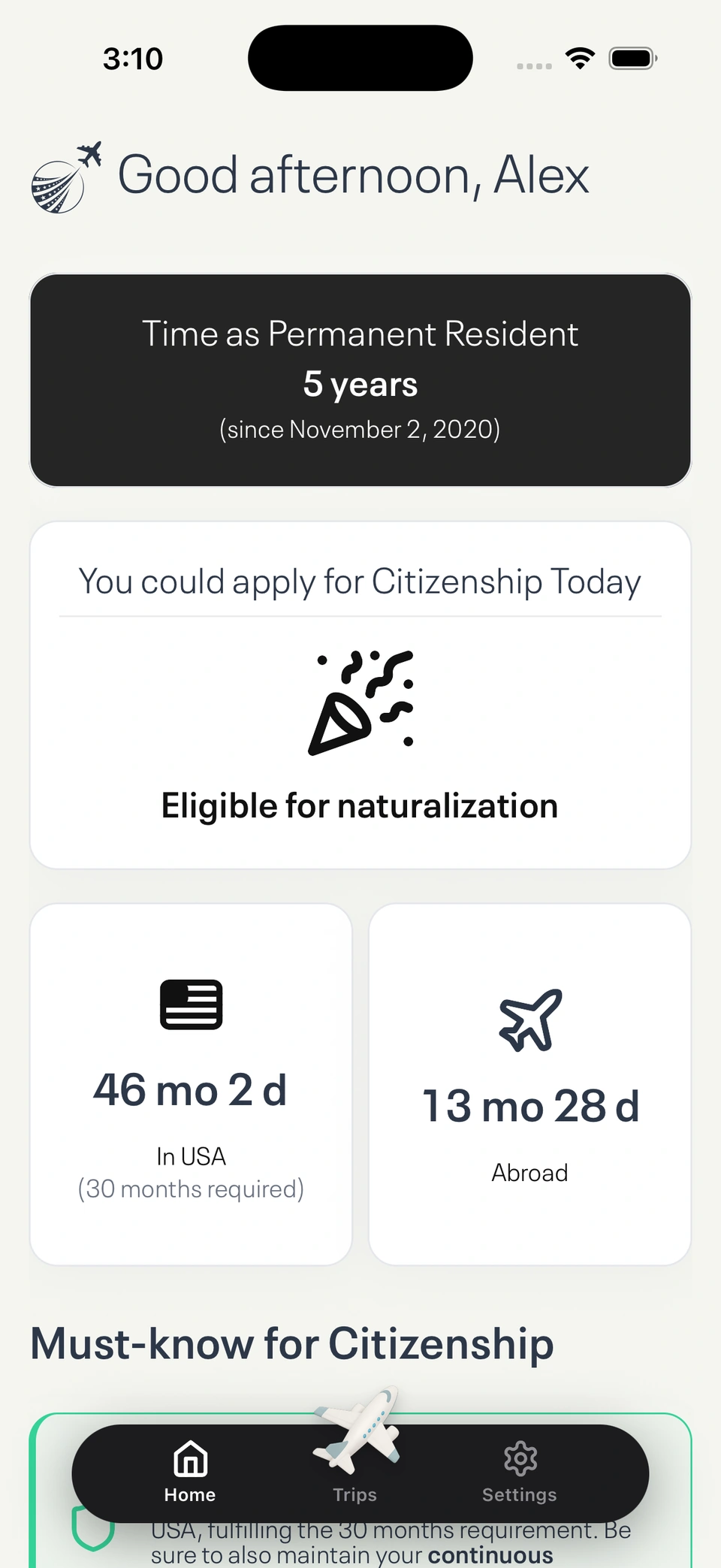
This is where keeping an accurate record pays off. Good moral character is separate from the continuous residence and physical presence requirements, but all three are reviewed together at your interview. Green Card Trips lets you log trips manually and calculates how those entries affect residence and physical presence, so your N-400 travel history is accurate and your filing date is clear. Download it from the App Store or Google Play to keep your citizenship timeline on track:
Stay on Track for Citizenship
Good moral character, continuous residence, and physical presence are the three pillars USCIS checks before approving your naturalization. Character comes down to honesty and a clean record during the statutory period. For the travel side, accuracy is everything, and that is what the app is built for. See when you can apply for citizenship for the full timeline, and use the app to track your trips so nothing on your N-400 comes as a surprise.
Frequently Asked Questions
Does USCIS require an affidavit of good moral character for naturalization?
No. There is no official affidavit of good moral character form for the Form N-400 naturalization application. USCIS evaluates your good moral character from your own application, your background checks, your interview, and supporting documents. You may voluntarily submit character reference letters, but they are optional and never replace a clean record and an honest application.
How far back does USCIS look for good moral character?
USCIS reviews good moral character during the statutory period before you apply: 5 years for most applicants, 3 years if you are married to and living with a U.S. citizen, or 1 year for certain military applicants. However, USCIS can also consider conduct before the statutory period if it is relevant to your current character, so older issues are not automatically ignored.
What automatically disqualifies you from good moral character?
Certain offenses are permanent bars at any time: murder, and an aggravated felony conviction on or after November 29, 1990. Acts of genocide, torture, severe violations of religious freedom, and persecution are also permanent bars. If any of these apply to you, consult an immigration attorney, because they generally prevent naturalization regardless of how much time has passed.
Does a DUI affect good moral character?
It can. A single DUI does not automatically bar good moral character, but multiple DUIs, a DUI involving injury, or a pattern of alcohol-related offenses during the statutory period may lead USCIS to question your character. USCIS reviews the full record. If you have any DUI on your record, gather court dispositions and consider speaking with an immigration attorney before you file.
Can I become a U.S. citizen with a criminal record?
Sometimes. A criminal record does not always prevent naturalization. It depends on the type of offense, when it happened, and whether it falls under a permanent or conditional bar. Minor offenses outside the statutory period may not block your case, while serious convictions can. Always disclose every arrest and citation on Form N-400, bring certified court records, and get legal advice for anything beyond a minor traffic ticket.
Do unpaid taxes affect good moral character?
Yes. Failing to file required tax returns or owing back taxes without a plan can count against good moral character. This is a common issue for green card holders who spent time abroad and assumed they did not need to file. If you owe taxes, set up an IRS payment plan and bring proof of it to your interview. Filing and addressing taxes generally protects your case.
Do I need character reference letters for my citizenship application?
No, character reference letters are not required for naturalization. Most applicants with a clean record do not submit any. They can help in discretionary situations, for example if you are rebutting a concern or your record has a minor issue you want to explain. An effective letter comes from someone who knows you well, states how long and in what capacity, and gives specific examples of your character.
Does Selective Service registration affect good moral character?
It can for men. Most men living in the United States between ages 18 and 26 must register with the Selective Service System. A knowing and willful failure to register during the statutory period can be treated as an unlawful act that reflects on good moral character. If you missed registration, you can request a status information letter from the Selective Service and explain the circumstances to USCIS.
What is the difference between good moral character and continuous residence?
They are separate requirements you must both meet. Good moral character is about your conduct and honesty during the statutory period. Continuous residence is about not breaking the continuity of living in the United States with long trips abroad, and physical presence is the total days you were in the country. A long trip can affect residence and presence even if your character is not in question.
Does USCIS ask about good moral character at the interview?
Yes. At your naturalization interview, the officer reviews your Form N-400 answers, including questions about arrests, citations, taxes, child support, and other conduct. Answer honestly. USCIS has access to background checks and government records, so an honest disclosure, even of a past mistake, is far better than an omission that looks like you were hiding something.
Disclaimer: This article provides general information and is not legal advice. Good moral character determinations are made by USCIS based on your individual case. Consult a licensed immigration attorney for your specific situation. Updated June 2026.