How to Count Days Outside the U.S. for Citizenship
Learn how to count days outside the U.S. for citizenship, check physical-presence risk, and keep your N-400 travel history organized.
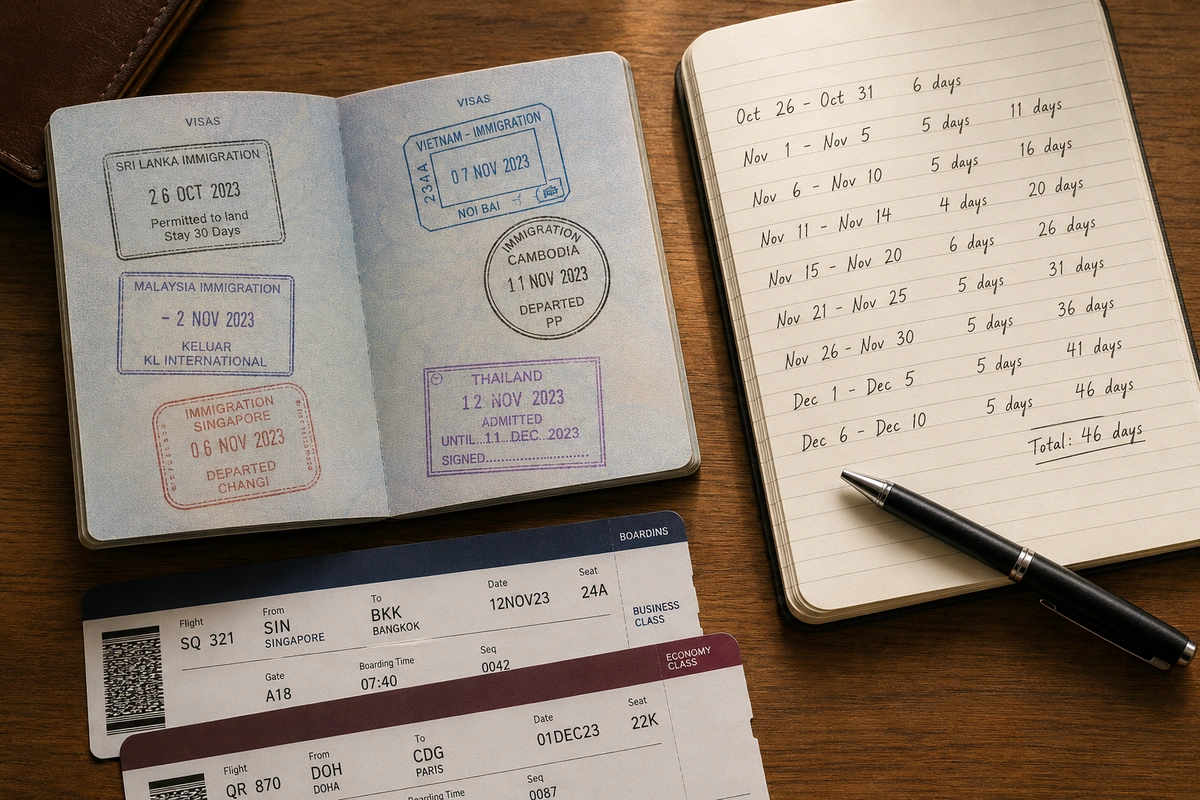
To count days outside the U.S. for citizenship, list every trip after becoming a permanent resident, count each full day you were outside the United States, and compare the total against the physical-presence requirement. Also review long absences separately: under 6 months is usually lower risk, 6 to 12 months can raise a rebuttable presumption, and 12 months or more can automatically break continuous residence.
That sounds simple until you have years of family visits, work trips, passport stamps, calendar gaps, and return flights in different time zones. The goal is not to build a perfect legal brief. The goal is to create a reliable travel history before you file Form N-400, so you can see whether your physical presence and continuous residence still support naturalization.
The Two Counts You Need Before Filing N-400
There are two separate travel-related checks behind a citizenship filing.
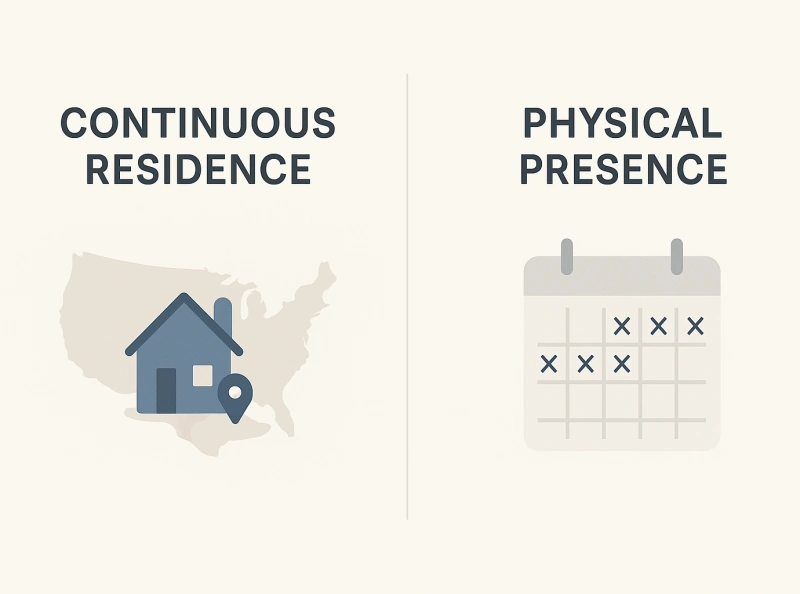
Physical presence is the day count. It asks how many days you were physically in the United States during the 3-year or 5-year statutory period. Most standard applicants need at least 913 days in the United States. Applicants on the 3-year marriage path generally need at least 548 days.
Continuous residence is the long-absence check. It asks whether you kept living in the United States during the required period. A person can have enough physical-presence days and still face a continuous-residence problem after one long trip. The opposite can also happen: many short trips can preserve continuous residence but leave you short on total days.
For a deeper comparison, read continuous residence vs physical presence. For a quick estimate before you rebuild every detail, use the citizenship eligibility calculator.
Step 1: Gather Your Trip History
Start by collecting anything that can confirm when you left and returned:
- Passport stamps and old passports
- Airline confirmations and boarding passes
- Calendar entries and work travel records
- Email receipts for hotels, rides, or travel insurance
- Photos with dates and locations
- Credit card statements when other records are missing
Do not assume the public I-94 site will solve everything. Lawful permanent residents may not have a complete public I-94 travel history, especially for older trips or certain entries. Your own records matter.
Create a simple working table:
| Departure date | Return date | Destination | Reason | Evidence source |
|---|---|---|---|---|
| 2023-03-10 | 2023-03-24 | Mexico | Family visit | Airline email |
| 2024-07-02 | 2024-08-18 | Vietnam | Parent care | Passport stamp |
| 2025-01-11 | 2025-01-20 | Canada | Work meeting | Calendar and receipts |
The evidence source column is useful later. It tells you which trips are solid and which ones need another record before you trust the count.
Step 2: Count The Days Outside The United States
For naturalization physical presence, the practical method is:
- Count the day you leave as a day in the United States.
- Count the day you return as a day in the United States.
- Count only the full calendar days between those dates as days outside the United States.
Example: if you leave on March 10 and return on March 24, the full days outside are March 11 through March 23. That is 13 days outside the United States.
Here is a worked example with three trips:
| Trip | Dates | Days outside |
|---|---|---|
| Family visit | March 10 to March 24, 2023 | 13 |
| Parent care | July 2 to August 18, 2024 | 46 |
| Work meeting | January 11 to January 20, 2025 | 8 |
| Total | 67 |
Date-entry mistakes are common. A spreadsheet formula can be off if it counts both travel days against you, and memory can miss short trips entirely. Before filing, check the trip list against your documents one more time.
Step 3: Check Physical Presence
Once you know your total days outside the United States, compare it to the required days inside the United States.
For most applicants:
| Naturalization path | Physical-presence requirement |
|---|---|
| 5-year path | At least 913 days in the United States |
| 3-year marriage path | At least 548 days in the United States |
Physical presence is not the same as the earliest filing date. The 90-day early filing rule can let you submit Form N-400 before the anniversary date, but it does not reduce the number of physical-presence days you need. If you are close to the line, calculate carefully and consider waiting until you have a cushion.
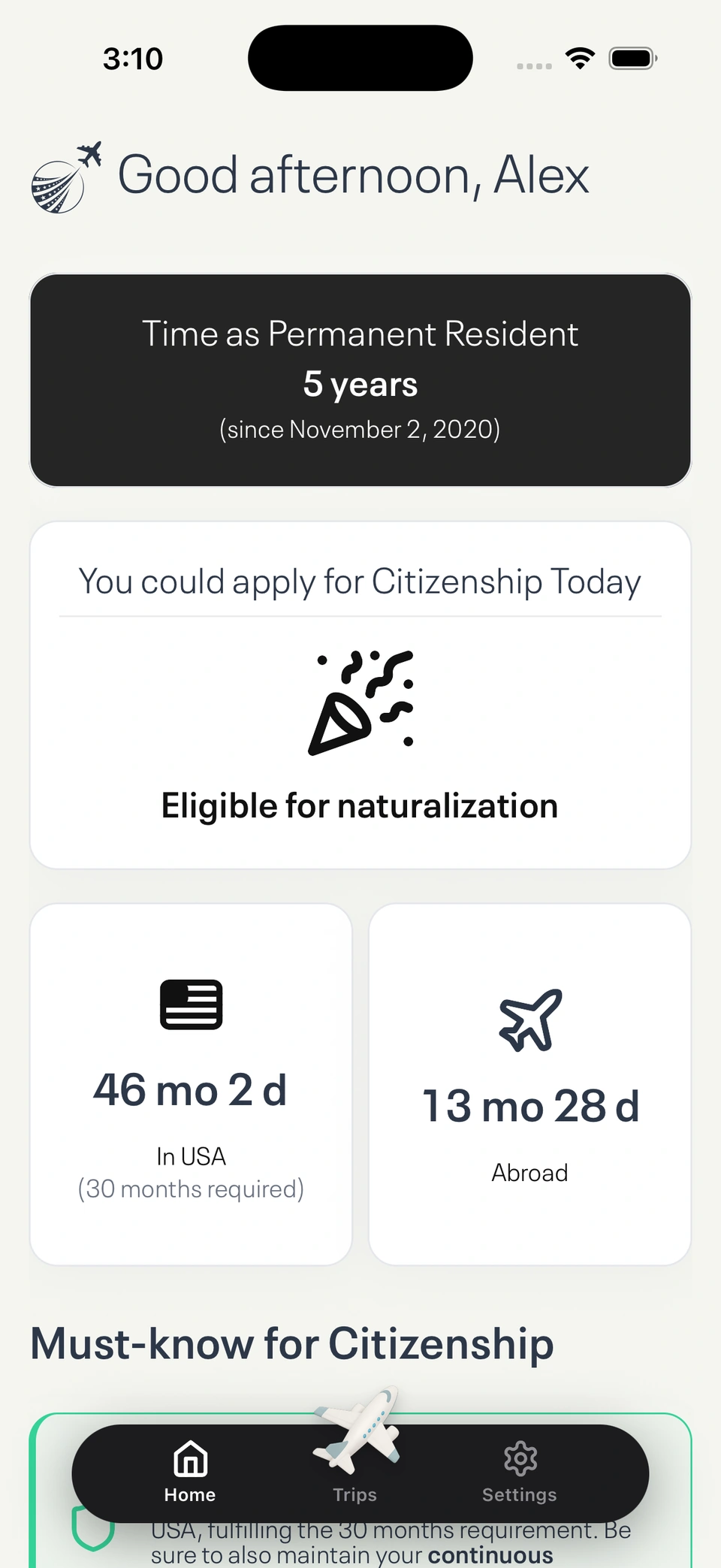
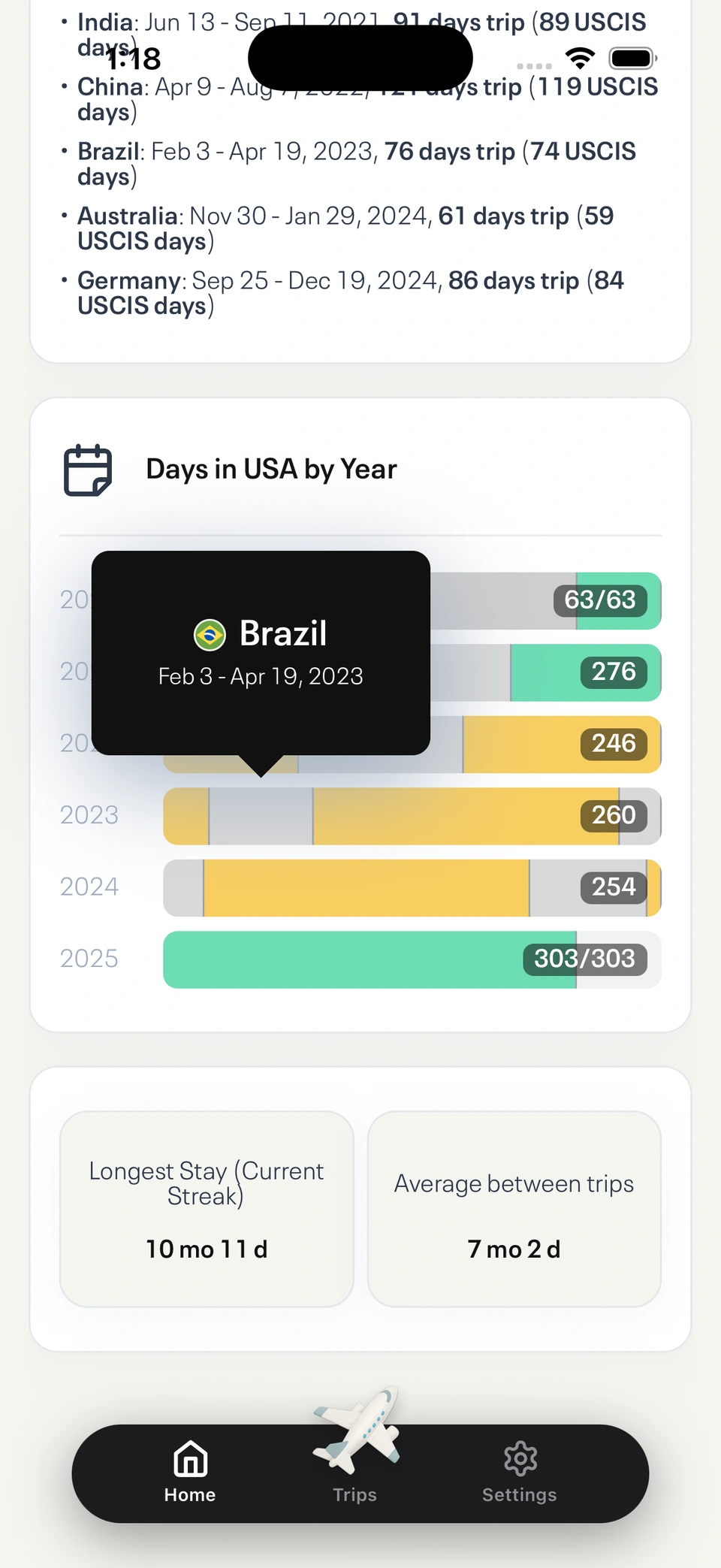
The web calculator can give you a one-time estimate from your green card date and trips. The app is better for the ongoing job: as you log trips, it keeps the citizenship countdown and physical-presence totals current.
Step 4: Check Continuous Residence Risk
After the day count, review your longest single absences. The broad continuous-residence tiers are:
| Single trip length | Citizenship risk |
|---|---|
| Under 6 months | Usually lower risk for continuous residence, but still counts against physical presence |
| 6 to 12 months | Can raise a rebuttable presumption that continuous residence was broken |
| 12 months or more | Can automatically break continuous residence unless a narrow preservation rule applies |
Use conditional language with yourself here. A 7-month absence does not always end the citizenship plan, but it can create a question you need to answer with evidence. Save records that show you kept U.S. ties: work, tax filings, lease or mortgage, immediate family, school enrollment, and the reason for the trip.
For long-absence evidence, read how to prove continuous residence after a 6-month absence. For timing, also review when you can apply for citizenship.
Step 5: Keep Tracking Until You File
Many people reconstruct their travel history once, then forget that the count keeps changing. If you take another trip before filing or while your case is pending, your totals and risk picture can change.
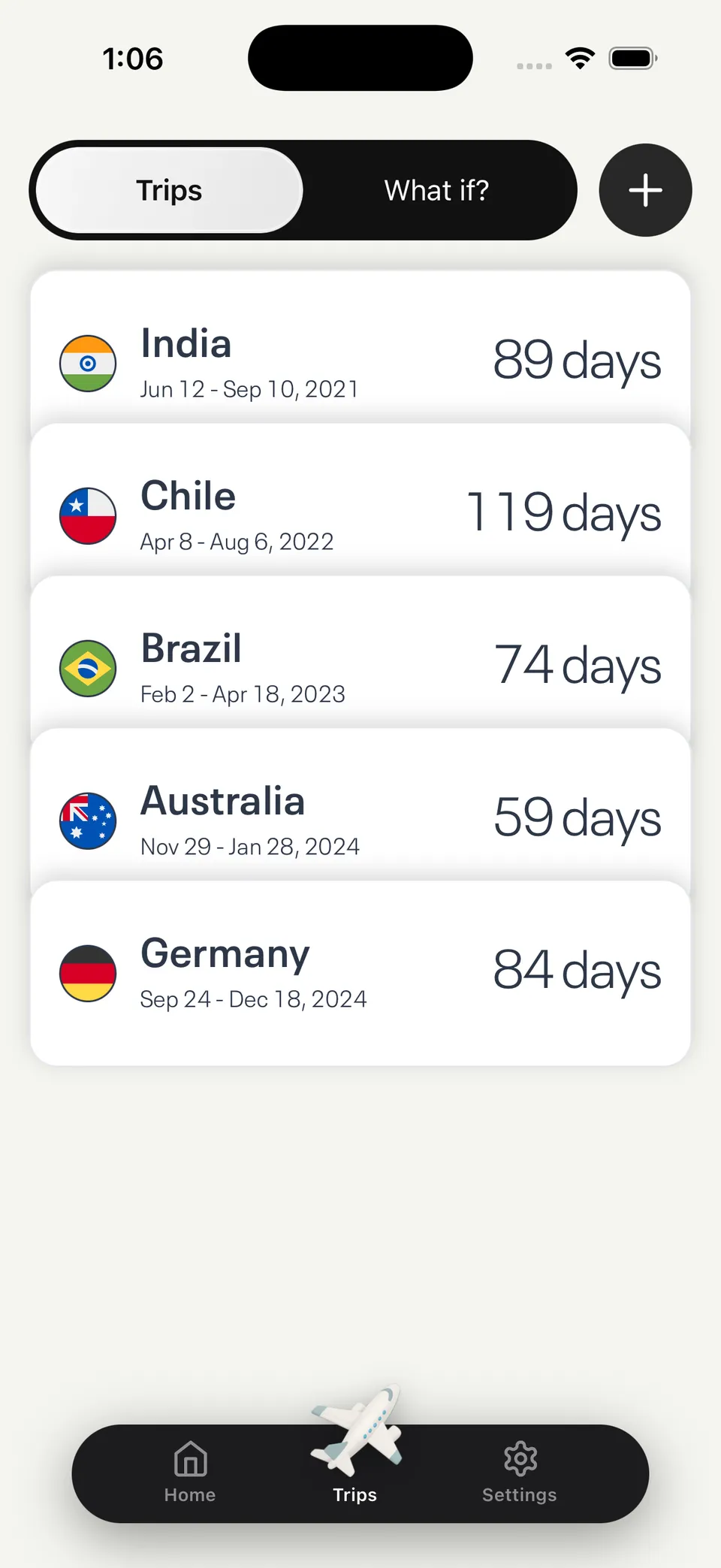
Green Card Trips is built for that ongoing tracking. You enter each trip manually, and the app calculates physical presence, citizenship timing, and long-absence risk from the trips you log. It is not automatic location tracking, and it does not replace legal advice. It is a structured way to keep your travel history in one place instead of trusting memory years later.
Spreadsheet vs App vs Memory
| Method | Best for | Main risk |
|---|---|---|
| Memory | Very recent short travel | Missing older trips |
| Spreadsheet | Reconstructing a known list | Formula and date mistakes |
| Green Card Trips | Ongoing trip logging and calculations | Still requires entering each trip |
A spreadsheet can work if you are disciplined and understand the day-counting rule. The app helps when your travel continues, because each new trip can update the same running timeline.
What To Do If A Trip Was Close To 6 Months
Do not guess. First, confirm the exact departure and return dates. Then save evidence of why you traveled and how you maintained U.S. ties. If the trip was 6 to 12 months, plan for the possibility that USCIS may ask questions. If it was 12 months or more, talk to an immigration attorney before assuming your old timeline still works.
A reentry permit can help with returning to the United States after extended travel, but it does not by itself preserve continuous residence for citizenship. For that distinction, see the I-131 reentry permit guide.
The safest pattern is simple: keep a complete trip log, update it as you travel, and check both physical presence and continuous residence before you file Form N-400.
Frequently Asked Questions
How do I calculate days outside the U.S. for citizenship?
List every trip after becoming a permanent resident, count only the full days you spent outside the United States, and compare your remaining days in the United States against the physical-presence requirement. Then review any long single absences separately for continuous-residence risk.
Do travel days count against physical presence for N-400?
USCIS generally counts the day you leave the United States and the day you return as days of physical presence in the United States. The full calendar days between departure and return are the days outside the country.
What is the difference between physical presence and continuous residence?
Physical presence is the total number of days you were inside the United States. Continuous residence asks whether your pattern of living in the United States was interrupted by a long absence or a move abroad. You must satisfy both requirements.
How many days do I need in the U.S. before applying for citizenship?
Most standard 5-year applicants need at least 913 days in the United States. Applicants using the 3-year marriage path generally need at least 548 days. These are physical-presence minimums, not the whole citizenship test.
What if I do not remember every trip on my N-400 travel history?
Start with passports, airline records, calendars, email receipts, photos, and card statements. If you still have gaps, be conservative and consider getting legal advice before filing, because missing trips can create problems during USCIS review.
Can an app help track green-card travel days?
Yes. An app can help you keep one trip log, calculate physical-presence totals, and flag long absences. Green Card Trips still requires you to enter each trip; it does not track your location automatically.
Does Green Card Trips track my location automatically?
No. You enter your departure and return dates. The app then calculates totals and risk signals from the trips you log.
What happens if one trip was more than 6 months?
A trip of 6 to 12 months can raise a rebuttable presumption that continuous residence was broken. A trip of 12 months or more can automatically break continuous residence unless a narrow preservation rule applies.
Disclaimer: This article provides general information and is not legal advice. USCIS makes eligibility decisions based on your individual facts. Consult an immigration attorney for advice about your situation. Updated June 2026.