Physical Presence Calculator for Citizenship: Check If You Can File N-400 Yet
Use a physical presence calculator to find your citizenship eligibility date, see how many days you still need, and learn when you can file Form N-400.

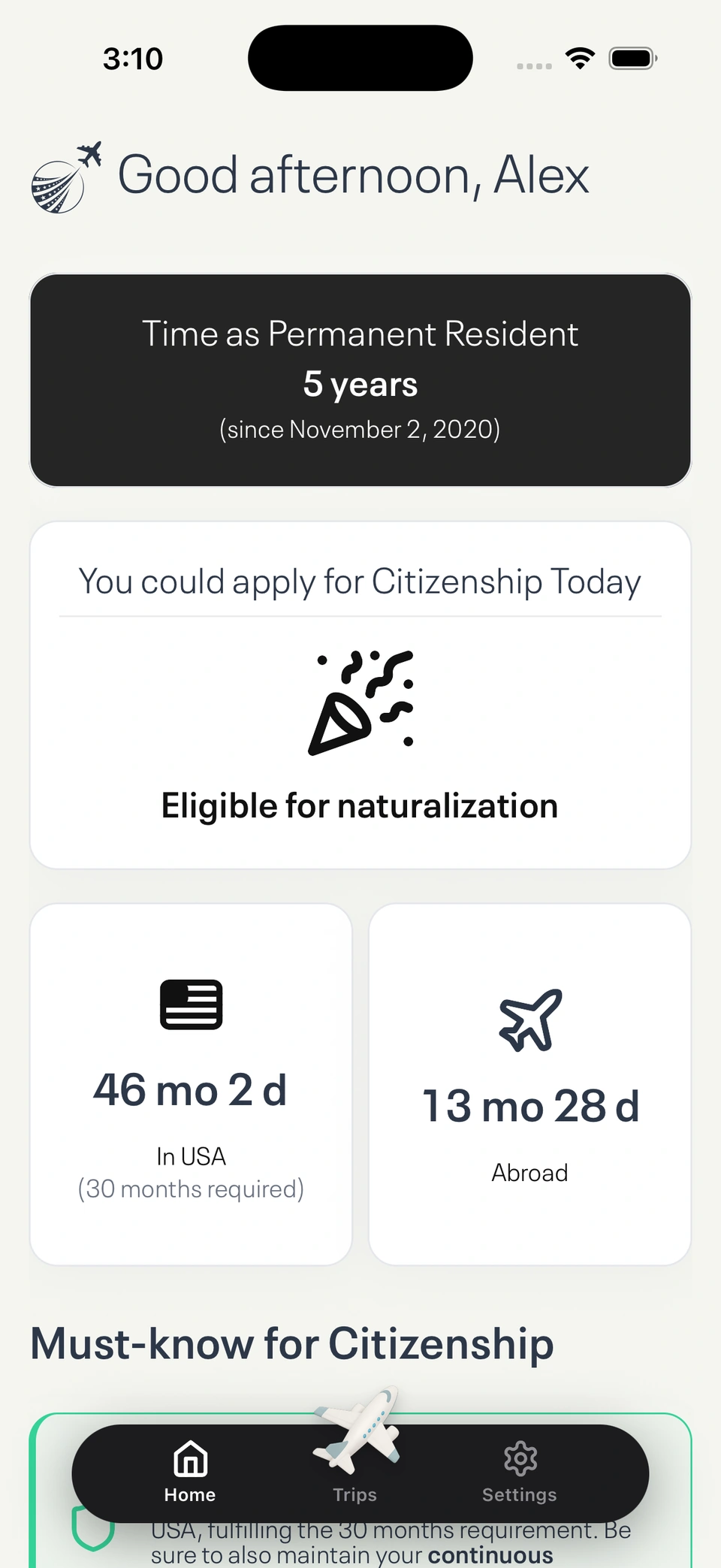
Quick Answer: A physical presence calculator takes your green card date and your trips abroad and returns two numbers: how many days of physical presence you have so far, and your earliest citizenship eligibility date. Most standard 5-year applicants need at least 913 days in the United States; most 3-year marriage-path applicants need at least 548 days. The calculator handles the day count — you still have to watch continuous residence (your longest single trips) on the side, which the Green Card Trips app flags for you as you log each trip.
A physical presence calculator estimates whether you have enough days inside the United States to file Form N-400 (Application for Naturalization), and it projects your earliest citizenship eligibility date. You enter the date you became a lawful permanent resident and every trip outside the country, and the tool subtracts your days abroad from the days the law requires.
This guide explains what a physical presence calculator measures, what to enter, how to read the result, and where a basic calculator stops and an app like Green Card Trips takes over.
What a Physical Presence Calculator Actually Measures
Naturalization has two separate travel-related tests, and a calculator handles them differently.
Physical presence is the day count. It asks how many days you were physically inside the United States during the statutory period (5 years for most applicants, or 3 years for the marriage path). This is the part a calculator does well, because it is arithmetic: total days in the period, minus the full days you spent abroad. For how many days the law requires and where that number comes from, see physical presence for citizenship.
Continuous residence is the long-absence check. It asks whether your pattern of living in the United States was interrupted by a single long trip. This part is not arithmetic, so most calculators only flag it rather than decide it. For a full comparison of the two tests, read continuous residence vs physical presence.
The baseline requirement comes from INA 316(a) (8 U.S.C. 1427), which sets the residence and physical-presence rules for naturalization. A calculator turns that statute into a running total you can actually see.
What You Need Before You Open the Calculator
A calculator is only as good as the dates you give it. Gather two things first:
- Your green card date. This is the date you became a lawful permanent resident, printed on your green card as the “Resident Since” date. The calculator counts from here.
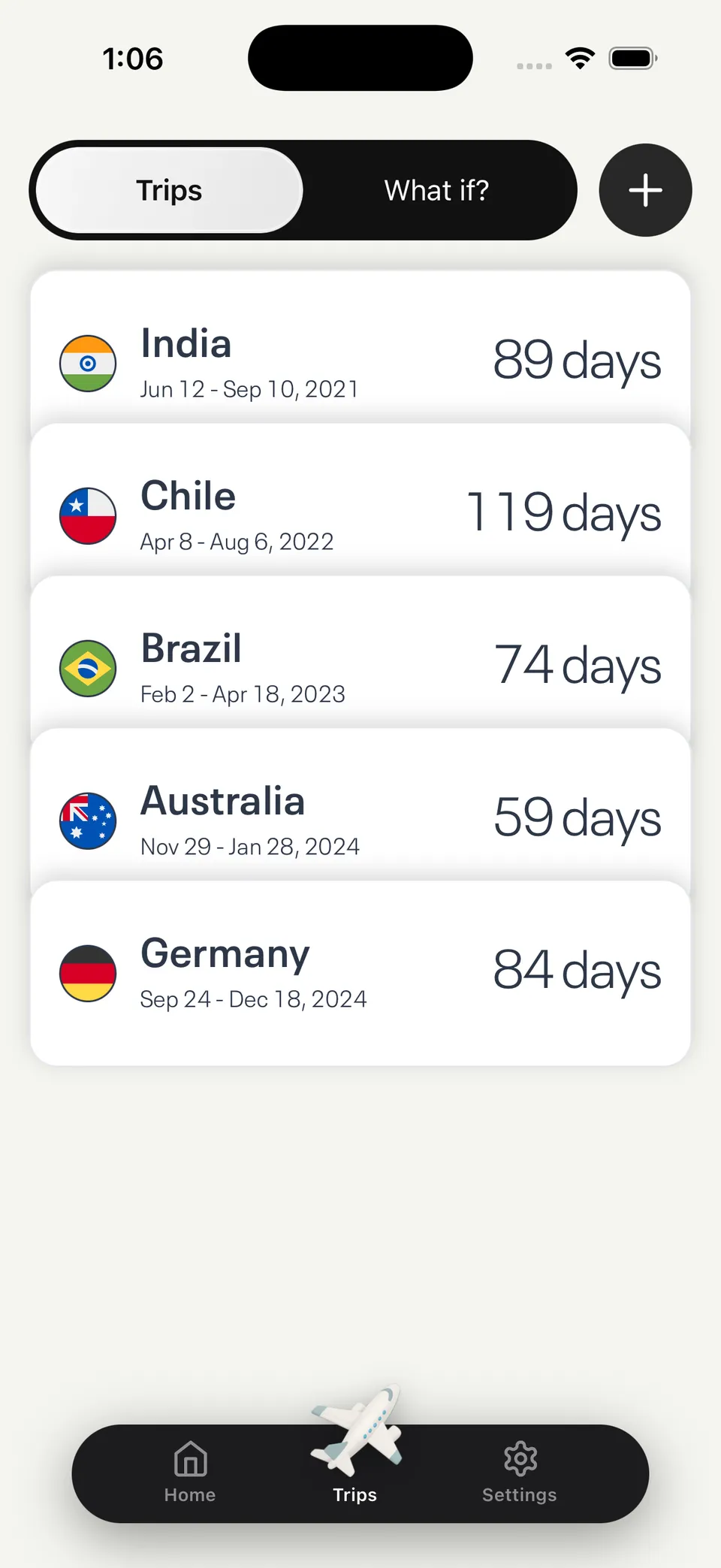
- Every trip outside the United States since that date. You need the departure date and the return date for each one.
Use your passport stamps, old passports, airline confirmations, calendars, and email receipts to rebuild the list. Lawful permanent residents may not have a complete public travel history online, so your own records matter. If you want a step-by-step method for the day count itself, see how to count days outside the U.S. for citizenship.
A simple trip list is enough to start:
| Departure date | Return date | Destination | Reason |
|---|---|---|---|
| 2023-03-10 | 2023-03-24 | Mexico | Family visit |
| 2024-07-02 | 2024-08-18 | Vietnam | Parent care |
How to Read Your Eligibility Result
A good physical presence calculator returns two numbers that matter most:
- Days of physical presence so far, compared against the requirement for your path.
- Your estimated eligibility date, which is when you will have met both the years of continuous residence and the physical-presence minimum.
Here is how the day count works. USCIS generally counts the day you leave and the day you return as days of physical presence in the United States, and counts only the full calendar days in between as days abroad. So a trip from March 10 to March 24 removes 13 days from your total, not 14.
| Naturalization path | Physical-presence requirement |
|---|---|
| 5-year path | At least 913 days in the United States |
| 3-year marriage path | At least 548 days in the United States |
If the calculator shows you are short, it is telling you that more time in the United States is needed before your day count clears the minimum. If it shows a future eligibility date, that date already accounts for the trips you entered. Add a new trip later and the date can move.

When Can You Apply? The 90-Day Early Filing Rule
Your eligibility date is not always the earliest date you can file. Many applicants can file Form N-400 up to 90 days before completing the required years of continuous residence, under the early filing provision described in the USCIS Policy Manual, Volume 12, Part D.
This is where “when can I apply for citizenship” and “am I eligible” become two different questions. The early filing window moves your filing date forward by up to 90 days, but it does not reduce the 913 days or 548 days of physical presence you need. If you are close to the line, file with a cushion rather than at the exact minimum. For the full timing picture, read when you can apply for citizenship.
Continuous Residence: What a Day-Count Calculator Misses
A day count can look healthy while a single long trip still creates a continuous-residence question. A plain day-count calculator only does arithmetic, so it will not catch this on its own. Review your longest absences separately using these tiers:
| Single trip length | Continuous-residence effect |
|---|---|
| Under 6 months | Usually lower risk, but every full day abroad still reduces physical presence |
| 6 to 12 months | Can raise a rebuttable presumption that continuous residence was broken |
| 12 months or more | Can automatically break continuous residence unless an approved Form N-470 preserves it |
These tiers come from 8 CFR 316.5(c)(1) and the USCIS Policy Manual, Volume 12, Part D, Chapter 3. Use conditional language with yourself: a 7-month trip does not automatically end your plan, but it can create a question you may need to answer with evidence of U.S. ties.
This is exactly the risk the Green Card Trips app flags for you. When you log a trip long enough to raise a continuous-residence question, the app warns you that the trip may break continuous residence, so you see the risk before you file rather than after. A bare day-count calculator stays silent on it.
If one trip did break continuous residence, the recovery clock is anchored to your return date, not to the day you left. You can file as early as 4 years and 1 day from your return date, but that early date carries a rebuttable presumption you would need to overcome. Many applicants instead wait until 4 years and 6 months from the return date to avoid the presumption entirely. For evidence after a long absence, see how to prove continuous residence after a 6-month absence, and for travel documents, the I-131 reentry permit guide.
Calculator vs Ongoing Tracking
A web calculator is built for a single estimate: enter your trips today, read your eligibility date, and plan around it. That is useful, but the count keeps changing every time you travel before filing or while your case is pending.
| Method | Best for | Main limit |
|---|---|---|
| One-time calculator | A quick eligibility-date estimate | Goes stale after your next trip |
| Spreadsheet | Reconstructing a known trip list | Formula and date mistakes |
| Green Card Trips | Ongoing trip logging and calculations | Still requires entering each trip |
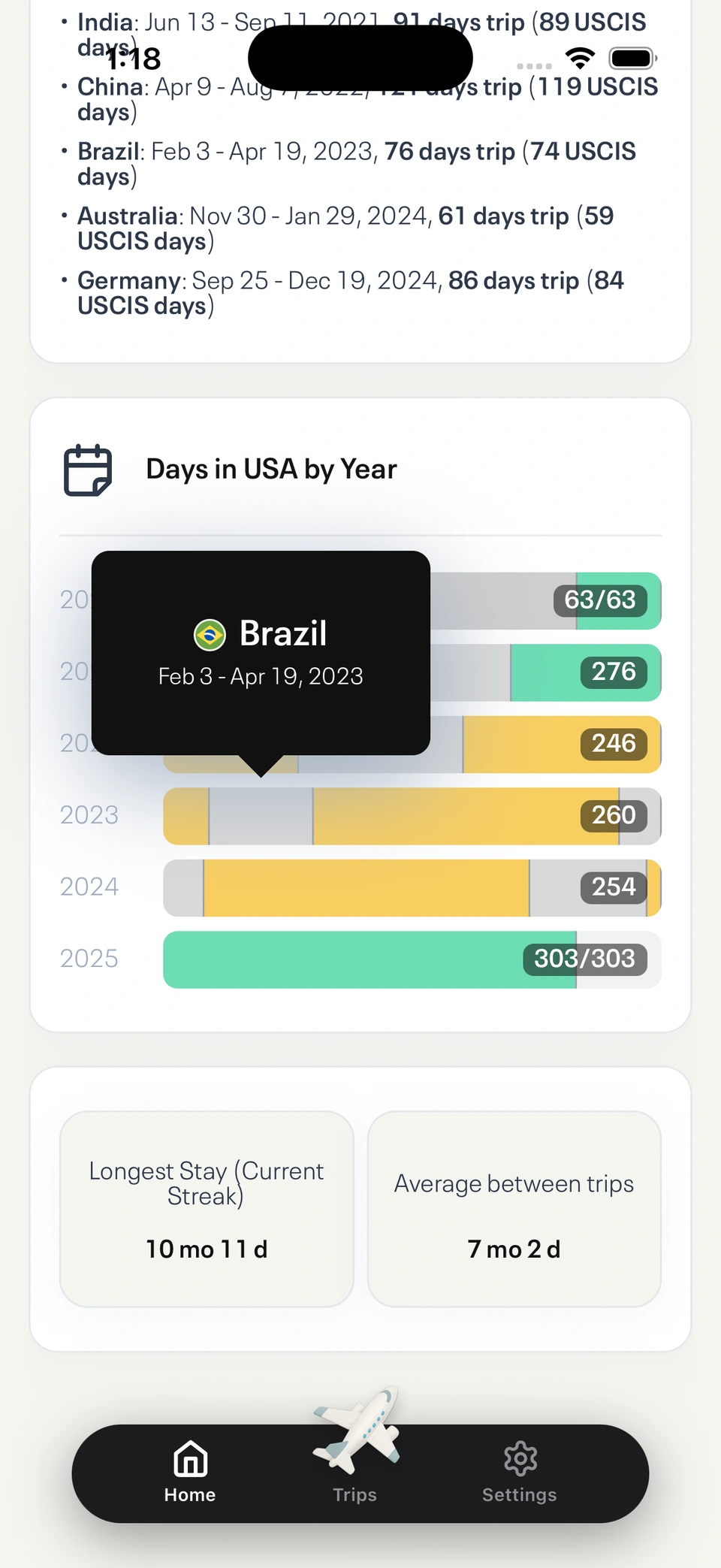
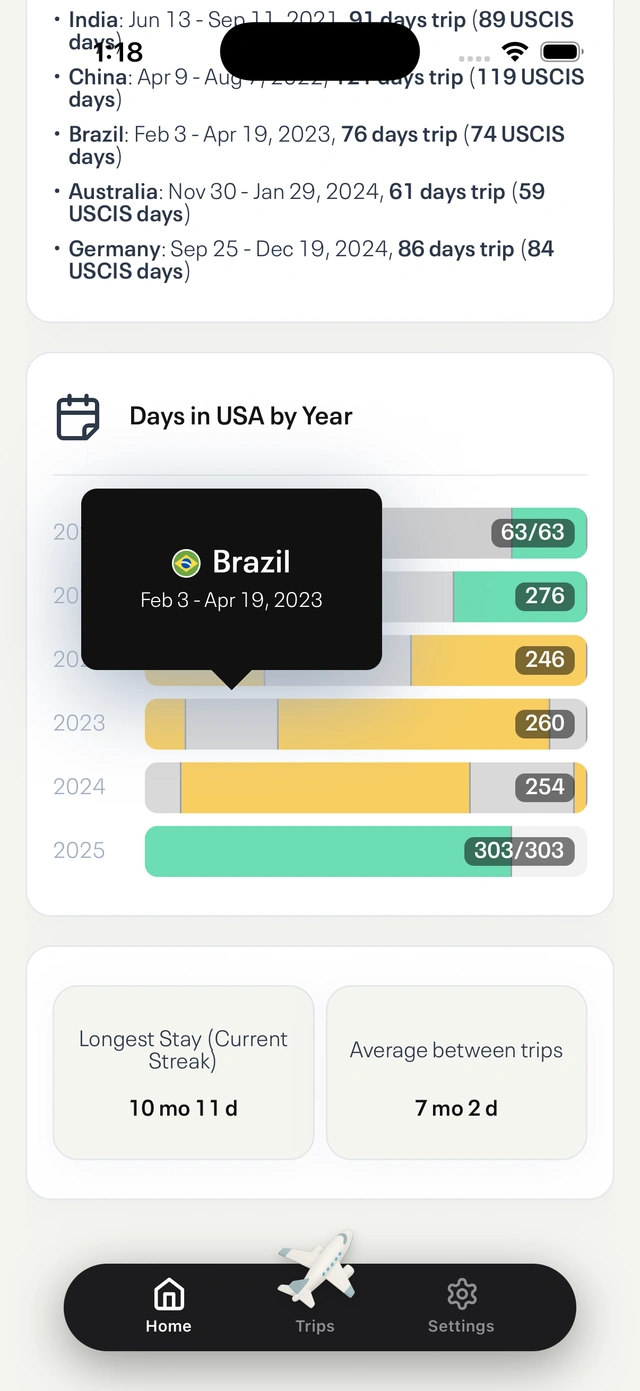
The citizenship eligibility calculator gives you that one-time estimate from your green card date and trips. The Green Card Trips app is built for the ongoing job: you enter each trip manually, and it keeps your physical-presence total, your citizenship eligibility date, and your long-absence risk current as you log new travel. It does not track your location automatically, and it does not replace legal advice. It is a structured way to keep one running answer instead of recalculating from memory years later.
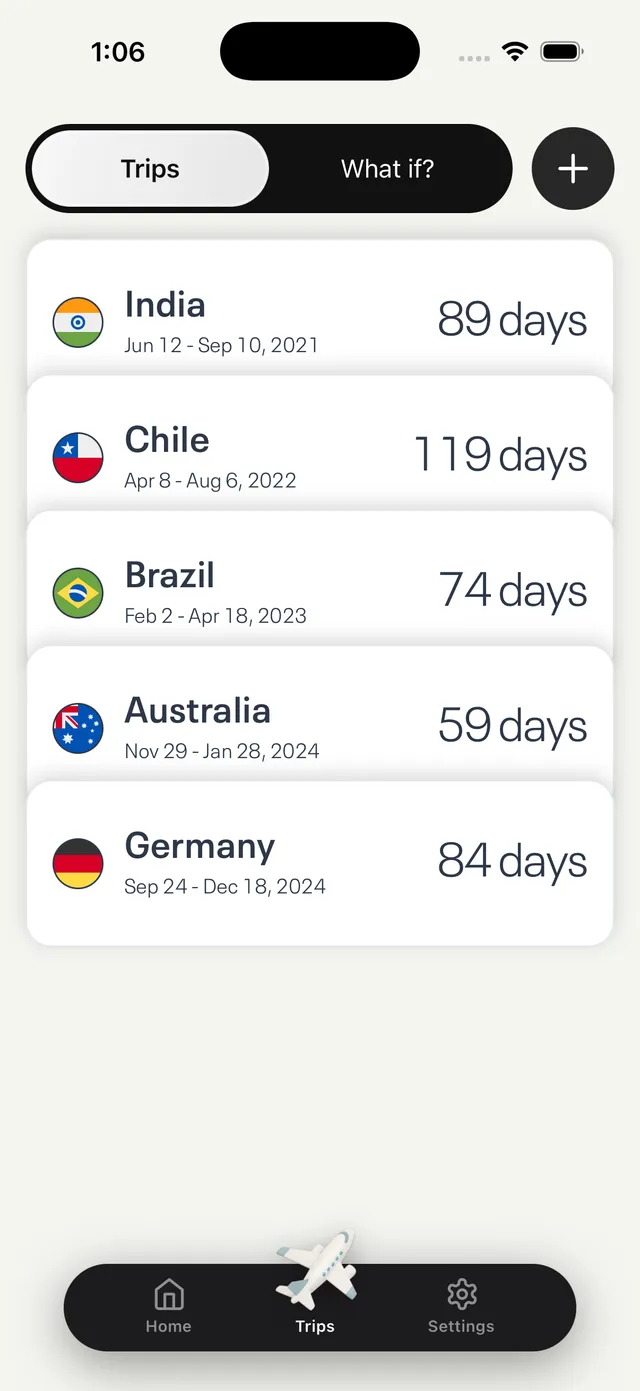
The safest pattern is simple: estimate early with a calculator, confirm your exact dates against your records, check continuous residence on your longest trips, and keep the count updated until you file Form N-400.
Frequently Asked Questions
What does a physical presence calculator do for citizenship?
A physical presence calculator estimates how many days you have spent inside the United States since becoming a permanent resident and compares that total against the days the law requires for naturalization. From your green card date and your trips, it projects your earliest citizenship eligibility date and shows how many days you still need.
How do I calculate when I can apply for citizenship?
Enter your green card date and every trip outside the United States. The calculator subtracts your days abroad to estimate your physical-presence total, then applies the 90-day early filing rule to project the earliest date you can file Form N-400. Always confirm continuous residence separately, because a long single trip can change the answer.
How many days of physical presence do I need to file N-400?
Most standard 5-year applicants need at least 913 days of physical presence in the United States. Most applicants on the 3-year marriage path need at least 548 days. These are minimums for physical presence only, and you must also satisfy continuous residence and the other naturalization requirements.
Can I apply for citizenship 90 days early?
Many applicants can file Form N-400 up to 90 days before completing the required years of continuous residence. The early filing rule moves your filing date forward, but it does not reduce the number of physical-presence days you need. A calculator can show both your eligibility date and the earliest filing date.
Does a citizenship calculator count continuous residence too?
Most calculators focus on the day count for physical presence and your eligibility date. Continuous residence is a separate question about whether a long single absence interrupted your residence. Review your longest trips on their own, because a trip of 6 months or more can raise questions even when your day count looks fine.
Is a green card calculator accurate enough to file my N-400?
A calculator is an estimate, not a filing decision. It is only as accurate as the trip dates you enter, and it cannot judge your individual continuous-residence facts. Use it to plan and to spot problems early, then confirm your exact dates against your records and, if you are close to the line, consider legal advice before filing.
Does Green Card Trips track my trips automatically?
No. You enter your departure and return dates yourself. The app then calculates your physical-presence total, your citizenship eligibility date, and long-absence risk from the trips you log. It does not track your location automatically.
What information do I need to use a physical presence calculator?
You need the date you became a lawful permanent resident (the date on your green card) and the departure and return dates for every trip outside the United States since then. Passport stamps, airline confirmations, and calendars help you fill any gaps before you trust the result.
Disclaimer: This article provides general information and is not legal advice. USCIS makes eligibility decisions based on your individual facts. Consult an immigration attorney for advice about your situation. Updated June 2026.